
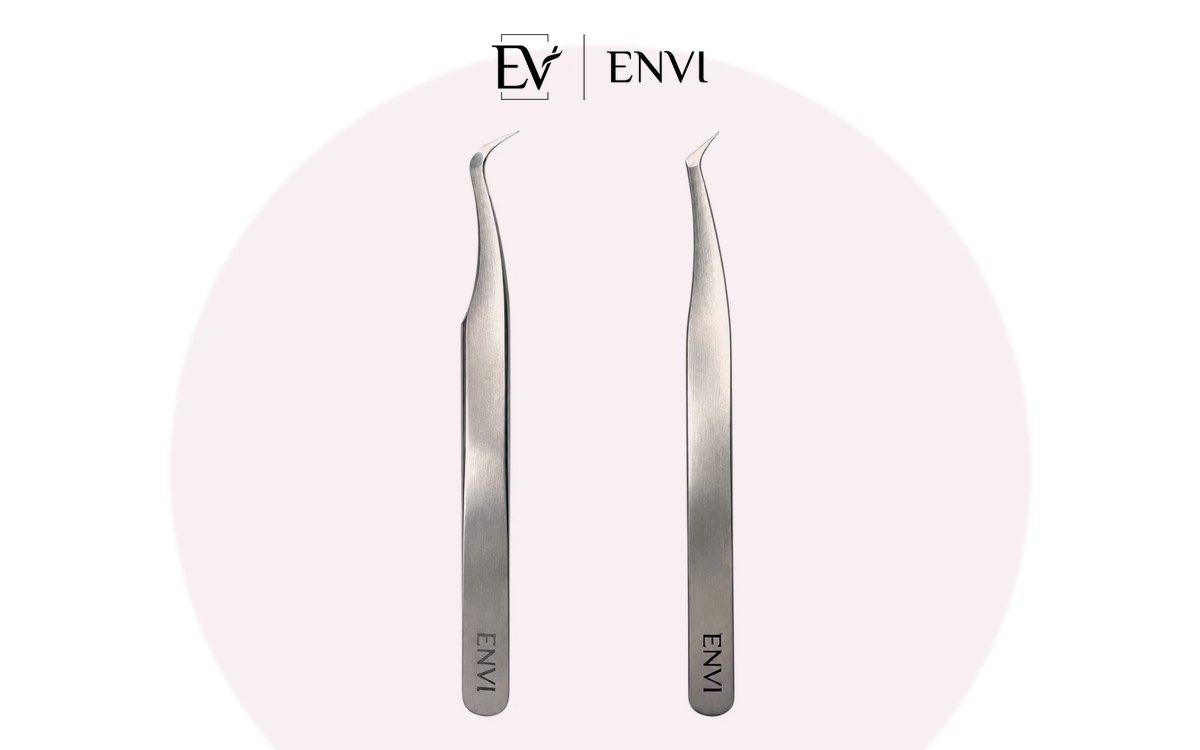
Tweezers work centimetres from the eye, so every client should get clean, disinfected and sterilized tools, and everything single-use should be new. A fixed routine saves decisions in the middle of a busy day.
Three terms worth keeping apart
- Cleaning: removing visible dirt and glue and remover residue. Without cleaning, disinfection and sterilization do not work properly.
- Disinfection: destroying most microorganisms in a suitable solution, for the contact time set by the manufacturer.
- Sterilization: destroying all microorganisms, including spores, in a dedicated device, for example dry heat or an autoclave, according to the device instructions.
What to do with tweezers after every client
- Glue residue: right after the appointment, before the glue dries, with a tweezer cleaner.
- Cleaning: with water and detergent, or in a ZX-956 ultrasonic cleaner (750 ml, 35 W, five timer modes). It is for pre-cleaning only: it does not sterilize and does not replace disinfection or sterilization.
- Disinfection: immerse in an instrument disinfectant for the contact time on the label, then rinse and dry if the instructions require it.
- Sterilization: in a CH-360T dry heat sterilizer (1.8 L, up to 220°C, with a timer) or another device, following its instructions. Also check the tweezer instructions for which sterilization method they allow, especially for coated tweezers.
- Storage: in a closed, clean container until the next client.
Single-use: new for every client
- Microbrushes and applicators; never dip a used brush back into the bottle.
- A new glue well for every client.
- Nitrile gloves, changed between clients and after touching your phone or money.
- Single-use patches, or reusable silicone patches cleaned and disinfected according to the manufacturer.
A clean station
- A stainless steel tool tray that is easy to clean and disinfect.
- A desktop waste bin with bags, so waste does not pile up on the table.
- Liquids such as cleanser and distilled water in a pump bottle, so you never touch the opening.
- Wipe the glue nozzle after every use and replace it with a new nozzle when it clogs.
Requirements in Israel
Before opening a studio, and from time to time afterwards, check the current Ministry of Health guidelines and your local authority's requirements for your business. This guide describes a general routine and does not replace official requirements.
The equipment is in the disinfection and sterilization and disposables categories. For choosing tweezers see our tweezers guide, and for reducing exposure to glue fumes our allergy prevention guide.